
Why I built JSTOP™
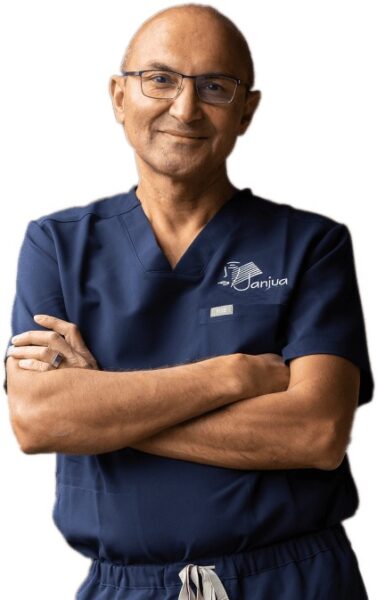 By: Tanveer Janjua, MD – CEO & Founder
In 1996, during my Otolaryngology residency at Yale New Haven Hospital, I managed a severe nosebleed using methods that had been around for generations.
The next morning on rounds, I presented the patient to the entire team. The discussion that followed was heated. A junior attending argued for the speed and simplicity of a Foley catheter. The Chief pushed back, insisting on the more thorough control offered by traditional packing. That moment stayed with me.
I remember feeling that both sides had something valid to say, but neither approach felt fully satisfying. One was faster, the other more complete — yet the patient still faced discomfort, complexity, and uncertainty. I left that room with a conviction that there had to be a better way.
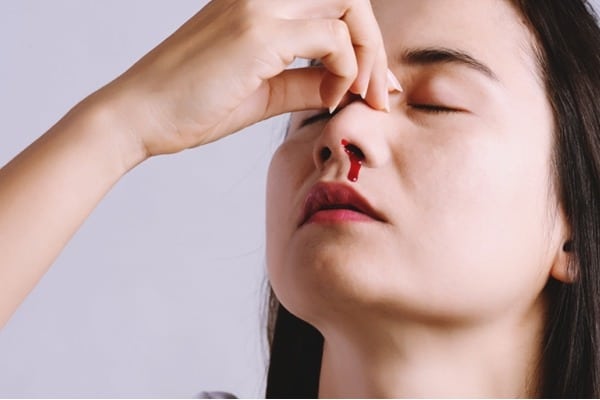
Over the years, as a practicing ENT and facial plastic surgeon, I kept encountering the same challenges in severe epistaxis: patient pain, difficult anatomy, unreliable control, cumbersome external fixation, and concern about posterior blood flow.
That thinking led me to design J-Stop.
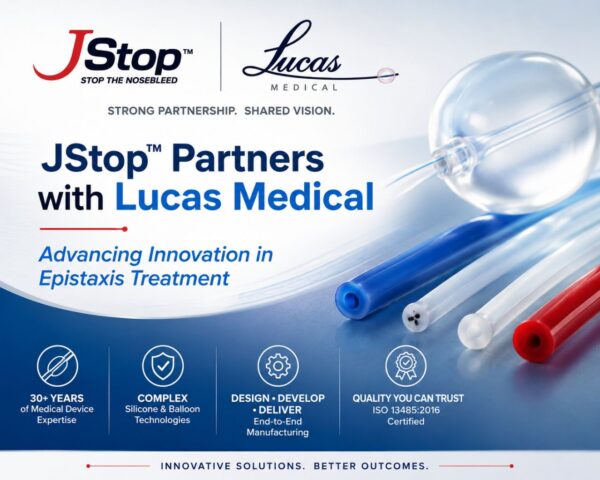
J-Stop is a dual-balloon catheter concept intended to help stabilize the nasal passage and support posterior occlusion in severe epistaxis.
The goal is to make management more reliable and less traumatic in difficult cases.
The journey was not easy. Multiple manufacturers rejected the concept before I was finally able to achieve proof of concept with help from POBA and their balloon catheter expertise. In 2018, I was granted a patent for J-Stop. After an FDA 513(g) request, J-Stop was classified as a Class I medical device. The next step was planning clinical trials.
Then recently, I encountered another difficult case that brought the whole issue back into sharp focus. Traditional packing was not enough, the anatomy was extremely limited, and once again the solution felt too cumbersome for the problem.
And once again, I had the same thought I had back in residency:
There has to be a better way.
The physician in me sees the problem. The founder in me is working on the solution.